- Home
- Privacy Guide
What is a bitcoin mixer? A practical bitcoin privacy guide
Why bitcoin is less private than it looks, what a mixer really does, how it compares with CoinJoin, and what to check before you trust one with your coins.

Bitcoin privacy starts with the public ledger
Bitcoin keeps a single shared record of every transaction ever made. That openness is what lets anyone verify the system, but it also means payments are visible to everyone. Addresses are not names, so the model is pseudonymous rather than anonymous. The difficulty is that a pseudonym rarely stays separate from a real identity for long.
An exchange that knows your identity, a shop that has your delivery address, or a friend you once paid can link one address to you. From that single link, blockchain analysis tools follow coins forward and backward, group addresses that are spent together and estimate balances. Over time your whole transaction history can become readable, including your income, savings and spending habits.
How does a bitcoin mixer work?
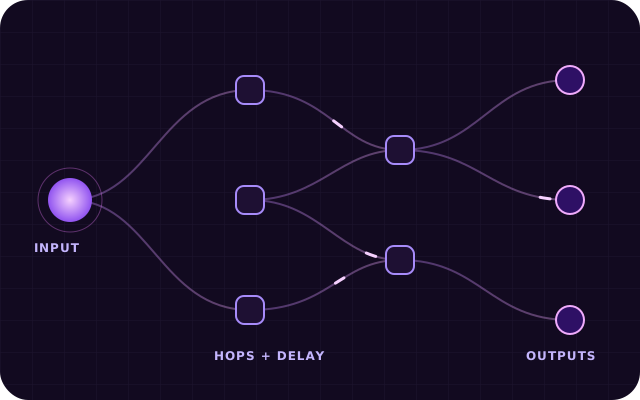
A bitcoin mixer, also called a bitcoin tumbler or bitcoin blender, takes coins from many users into a common pool and pays each user back from that pool. You send one amount and later receive a similar amount from coins that have a different history. On the blockchain there is no transaction that goes directly from your deposit address to your payout address.
Quality services add more layers: payouts are split into several parts, each part is released after a random delay, and the fee varies so amounts cannot be matched. Each layer removes one of the clues that analysis relies on: a direct link, timing, or a matching value.
CoinJoin versus a custodial mixer
CoinJoin is a different approach. Several people build one joint transaction in which every participant puts coins in and takes coins out in equal sizes. Nobody holds the funds of others, which is its main strength. The weak points are coordination, fixed denominations that leave visible change, and the fact that a CoinJoin transaction is easy to recognise.
A custodial mixer such as Mixero accepts the deposit and pays out from its own reserve. That requires trust in the service for the duration of the order, but it allows any amount, several outputs and custom timing. Many users combine the two: CoinJoin for small sums, a mixer when they need flexible payouts.
How to choose the best bitcoin mixer for you
There is no single best bitcoin mixer for every situation, but a reliable one usually passes these checks:
- Clear terms before payment. The deposit address, fee and timing are shown before you send anything.
- No unnecessary data. No account, no email requirement, and a stated policy on deleting order data.
- Variable fee and delay. Fixed values make matching easier.
- Multiple outputs. Splitting the payout is one of the most effective protections.
- Sensible minimum. A very low minimum can be a sign that the reserve is small.
- Official address. Bookmark the real domain, for Mixero that is mixero.net, and check it each time to avoid copycat sites.
Three common myths
“A new address is enough.” Moving coins to a fresh address in your own wallet keeps the visible link intact; anyone following the chain simply takes one more step. “Exchanges hide my history.” They show your balance to you, but withdrawals are ordinary on-chain payments that anyone can trace. “Mixing is only for big amounts.” Everyday payments reveal just as much about you, which is why many people use a BTC mixer for routine sums too.
Privacy and the law
Wanting a private financial life is normal and legitimate. Rules on using a crypto mixer differ between countries, though, and some places restrict such services. Check the rules where you live before using any mixer. Our FAQ covers this in more detail, and the How it works page shows the Mixero order flow from start to finish.